
Benign Lung Lesions
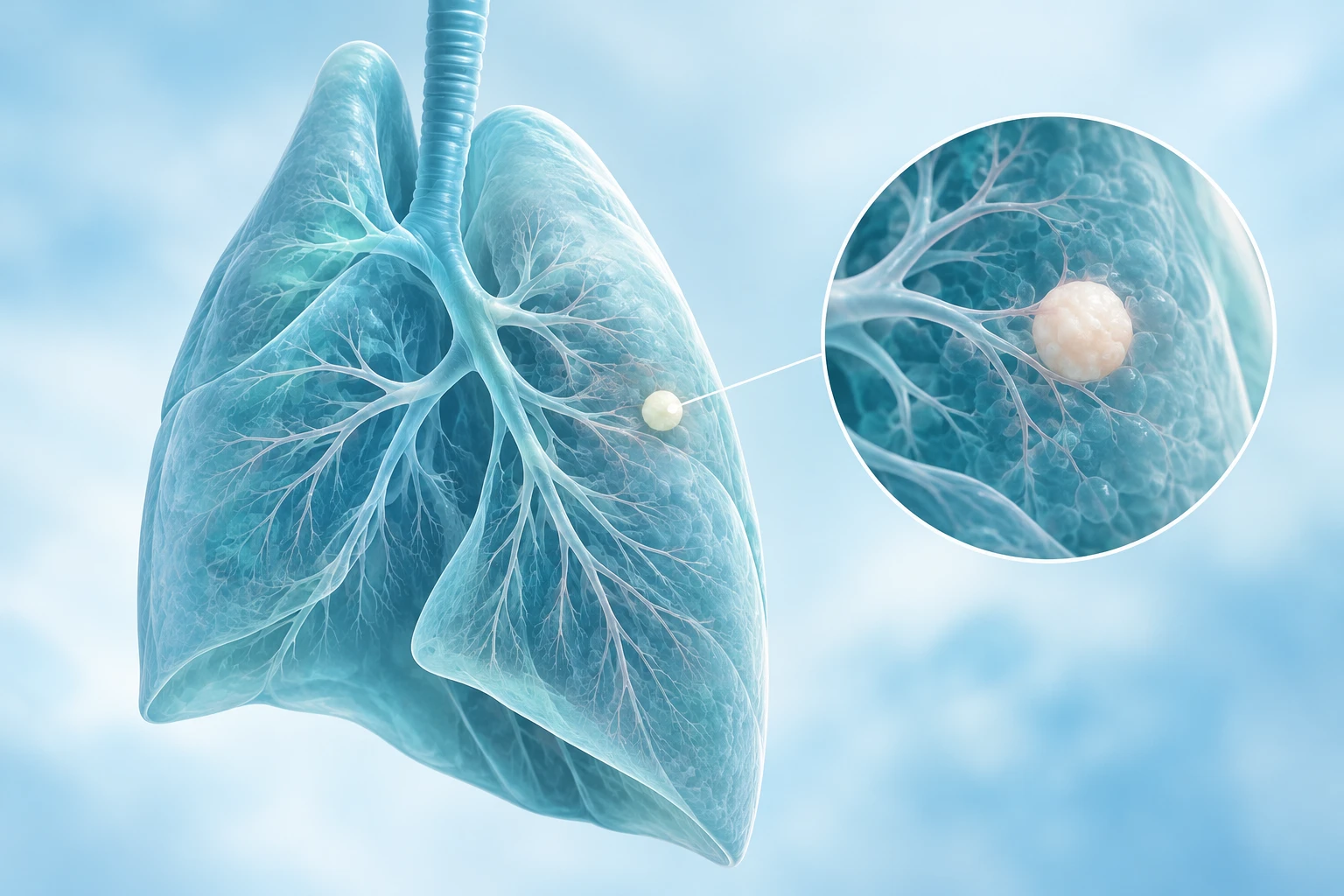
Benign means noncancerous. Tumors such as hamartomas, areas affected by previous infection and some inflammatory changes can form lung lesions. This page focuses on the surgical assessment of benign lesions other than bronchiectasis and bullae.
Draft awaiting medical review · General information; not a substitute for an individual consultation and assessment.
Content updated: 22 October 2026 · Last physician review: not yet completed.
What does a benign lesion mean?
Benign means noncancerous. Tumors such as hamartomas, areas affected by previous infection and some inflammatory changes can form lung lesions. This page focuses on the surgical assessment of benign lesions other than bronchiectasis and bullae.
Can imaging provide a definitive diagnosis?
Size, borders, fat or calcium content and changes from previous scans provide useful clues. However, CT alone cannot definitively distinguish every lesion. A finding thought to be benign is not the same as a diagnosis confirmed by pathology.
Deciding between monitoring and biopsy
Comparing previous images and assessing individual risks are important. Imaging surveillance may be preferred in a suitable patient. Growth, suspicious appearances or diagnostic uncertainty may prompt discussion of bronchoscopy, needle biopsy or surgical sampling. The method depends on the lesion’s location.
When is surgery needed?
An unclear diagnosis, growth or problems such as airway obstruction may prompt surgical assessment. The aim is to obtain the necessary diagnosis and treatment while preserving as much functioning lung as possible. The extent of the procedure and suitability of VATS or another approach are individualized.
Risks and follow-up appointments
Biopsy and surgery carry risks such as bleeding, pneumothorax, air leakage and infection. Pathology determines the next step. If surveillance is chosen, keep follow-up appointments even without symptoms. Report new blood in sputum or increasing breathlessness to your physician.
Frequently asked questions
Is follow-up unnecessary if a lesion is thought to be benign?
No. Follow-up needs depend on diagnostic certainty and the lesion’s characteristics.
Should every nodule be operated on?
No. Risk assessment, previous images and the balance of potential benefits and harms guide the decision.
Further reading
Patient information sources · Sources checked: 22 October 2026. Checking sources does not mean the text has been medically approved by the physician.